
2025 Philadelphia Tango Festival
April 30, 2025
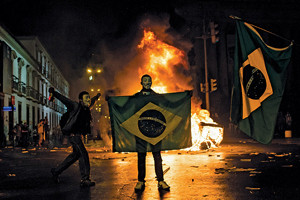
Protests Follow Economic Success
Moisés Naím, former editor of Foreign Policy magazine, asks the question of why there are protests in such economic successes as Brazil, Turkey, and Chile. The answer, he argues, is that there is a lag in time between social and economic advances and change in political institutions. He states: “The answer may be found in a book that the late Harvard political scientist Samuel Huntington published in 1968, Political Order in Changing Societies. His thesis is that in societies experiencing rapid change, the public’s demand for public services grows at a faster clip than the government’s ability to satisfy it. His more general point is that institutions cannot develop at the pace required by the fast-growing expectations of a population recently empowered by prosperity, literacy, more information, and a newfound expectation—indeed hunger—to shape its own better future. In Huntington’s words, “The primary problem of politics is the lag in the development of political institutions behind social economic change.”